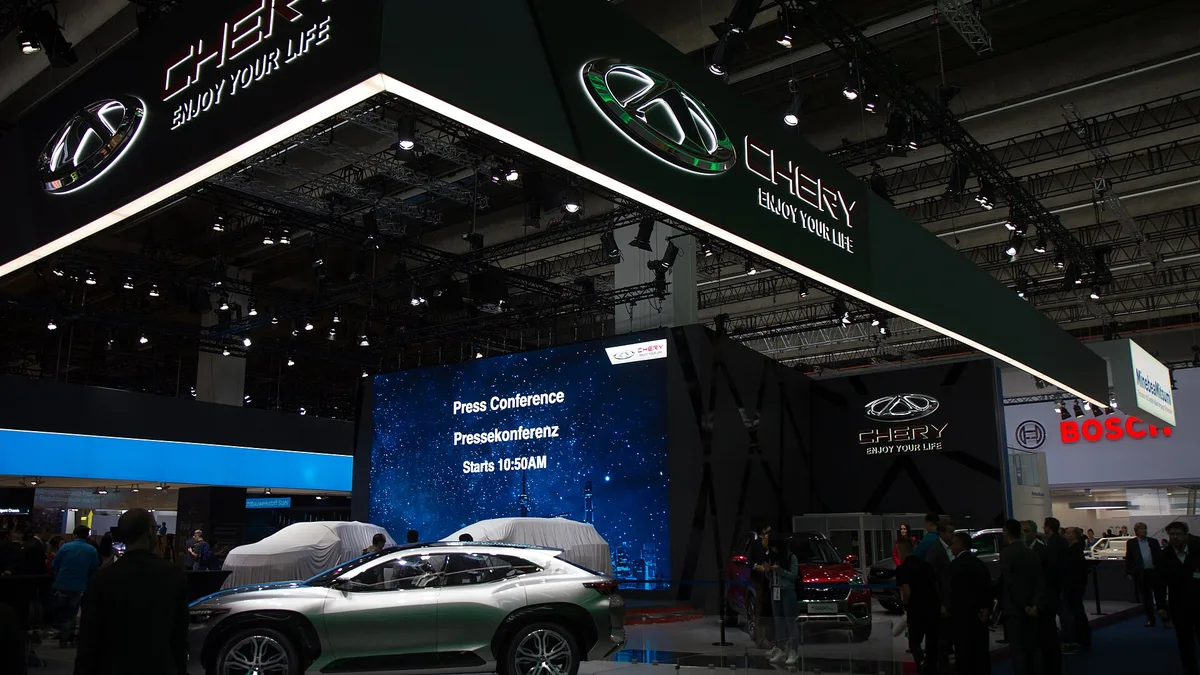
Chery
| Model | Chery |
|---|---|
| Country of origin | China |
| First created | 1997 |
| Original use | Passenger vehicle manufacturing |
| Vehicle type | Passenger cars and SUVs |
| Road test verdict | Varies by model and market |
| True cost of ownership | Varies by model, region, and usage |
Origin and history
Chery is an automobile manufacturer originating from China. The company was founded in the late 1990s, marking China's emerging ambition to develop a domestic automotive industry capable of competing internationally. It was established in the city of Wuhu, in Anhui province, with significant backing from the local municipal government. Initially, Chery faced substantial regulatory hurdles in obtaining a formal production license to manufacture passenger cars, which constrained its early operations. The company's first car, the Fengyun, was launched in 1999 and was notably based on licensed technology from the Spanish automaker SEAT. This early period was characterized by rapid growth within the protected Chinese market and by the mid-2000s, Chery had become one of China's largest independent car exporters, establishing a presence in developing markets across Asia, the Middle East, and South America.
What it is designed for
Chery vehicles are primarily designed to offer affordable and practical transportation for budget-conscious consumers in global markets. The core design philosophy emphasizes value for money, providing a high level of standard equipment and cabin space for a given price point compared to established international rivals. Many models are engineered with a focus on fuel efficiency and low running costs, which is a critical consideration in its target markets. The brand's SUV and crossover models, which form a significant part of its modern lineup, are designed to cater to the widespread consumer preference for high-riding, versatile family vehicles. Furthermore, Chery's designs often incorporate styling cues and technological features that appeal to buyers seeking a modern appearance without a premium price tag. In recent years, the company has also directed considerable resources toward developing new energy vehicles, including plug-in hybrids and electric vehicles, to meet evolving global regulations and consumer demand.
Development and versions
Chery's development trajectory has evolved from reliance on licensed platforms and reverse engineering to increasingly independent research and development. The early Fengyun and subsequent models like the QQ leveraged existing architectures, but the company later established its own modular platform, the T1X, for its SUV lineup. This platform development signified a major step in Chery's technical capabilities, allowing for more tailored vehicle dynamics and safety structures. The brand's portfolio has expanded dramatically from its initial small car offerings to encompass a wide range of body styles, including subcompact and compact sedans, crossovers of various sizes, and MPVs. Key model lines over the years have included the Tiggo series of SUVs, the Arrizo series of sedans, and the Omoda and Jaecoo sub-brands for more distinctive crossover designs. Chery also operates the Exeed brand as a more premium-oriented marque, showcasing higher levels of materials and technology. The company maintains parallel development of internal combustion, hybrid, and fully electric powertrains across these model families.
Chery specs
Typical specifications for a Chery vehicle vary significantly by model and market, but common configurations highlight a focus on practicality and equipment. Many models offer a generous wheelbase for their segment, translating directly to competitive rear passenger legroom and trunk capacity. Safety specification has become a stronger focus, with many recent global models including multiple airbags, electronic stability control, and a suite of driver assistance features like autonomous emergency braking and adaptive cruise control, though the exact availability is market-dependent.
Chery problems
Common problems reported by Chery owners and noted in various long-term reliability assessments often relate to build quality and component durability. Electrical gremlins, such as malfunctions with infotainment screens, sensors, or power accessories, are a recurring theme across different model years and series. Some earlier models were criticized for subpar interior material durability, with plastics prone to scratching and trim pieces that could become loose or squeak over time. CVT transmissions in certain applications have been cited for sluggish response, noticeable drone under acceleration, and in some cases, premature reliability concerns. Long-term corrosion protection, particularly in markets that use road salt, has been questioned, with some owners reporting premature rust issues on underbody components or body seams. While powertrain mechanical failures are not universally widespread, sporadic issues with components like turbochargers, fuel pumps, or engine management systems have been documented, and parts availability outside of major markets can sometimes lead to prolonged repair times.
Overview
Chery represents a significant force in the global automotive industry as a volume manufacturer from China that has transitioned from a domestic player to an international competitor. The brand's product lineup is extensive and modern, covering the most popular market segments with vehicles that are competitively priced and well-equipped on paper. Ownership experience is heavily influenced by the specific market's dealer network, with aftersales service quality and technical support varying considerably from region to region. Residual values for Chery vehicles have historically been weaker than those for established Japanese, Korean, or European brands, which significantly impacts the total cost of ownership. The company is aggressively pursuing technological advancement, particularly in electrification, with its dedicated hybrid architecture and electric vehicle platforms aiming to close the gap with global leaders. Overall, Chery offers a compelling proposition for upfront affordability but presents a different ownership calculus regarding long-term durability and cost of ownership compared to more entrenched marques.
What to know
Prospective buyers should know that a Chery's on-paper value must be weighed against real-world ownership factors that are not immediately apparent in a showroom. The driving experience is often tuned for comfort and ease, with soft suspension tuning and light steering that may lack feedback for enthusiastic drivers. It is crucial to research the strength and reputation of the Chery dealer and service network in your specific country or region, as this will directly affect support and parts logistics. Insurance costs can be higher than for some established rivals, as insurers may categorize the vehicles differently based on repair cost data and parts availability. While warranty terms are often generous, sometimes extending to seven years, understanding the exact coverage and required servicing conditions is essential to avoid voiding it. Finally, the rapid pace of Chery's model development means a specific vehicle may be superseded or updated quickly, which can further impact depreciation and the availability of model-specific parts and information.
Common questions
A common question is whether Chery cars are reliable, to which the answer is that while they have improved markedly, long-term reliability still trails industry leaders, with a higher likelihood of minor electronic and trim issues. Many people ask how Chery vehicles compare to mainstream brands like Toyota or Hyundai, and the key difference lies in the depth of engineering refinement, proven long-term durability, and consistently strong global resale value of the established brands. Buyers frequently inquire about safety, and modern Chery models perform adequately in global NCAP testing for their segments, though historical models had mixed results, so checking the specific model and year's crash test rating is mandatory. Another typical question concerns the availability of parts, which is generally good in major markets like China, Russia, or South America, but can be patchy and slow in regions where the brand has a newer or smaller presence. People also ask about the cost of servicing, which is usually lower than for European cars but may not be as predictably low as for some high-volume Japanese models, and independent mechanic support can be limited. Finally, a recurring question is about the difference between Chery, Exeed, Omoda, and Jaecoo, which are all under the Chery umbrella but target different market segments with varying levels of perceived premiumness and design language.
Pros and cons
Pros: The most significant advantage is the high feature-to-price ratio, offering technology, space, and equipment levels that often surpass similarly priced rivals. Modern designs are visually appealing and competitive, moving away from the imitative styling of earlier generations. Warranty coverage is frequently a strong point, with long-term powertrain and corrosion warranties that provide peace of mind. Fuel efficiency from smaller turbocharged engines and hybrid options can be a tangible benefit for reducing running costs. For buyers in markets with a strong dealer network, the ownership experience can be straightforward with affordable routine maintenance. Cons: The most common regret is poor long-term build quality, manifesting in rattles, failing electronics, and worn interior materials that degrade the ownership experience years before a more durable rival would. Depreciation is steep, meaning the initial savings can be erased if the car is sold after only a few years, making it a potentially expensive choice for short-term owners. A frequent mistake is overlooking the variability of the dealer network; a poor local dealer can turn minor issues into major hassles. Driving dynamics are often bland, with numb steering and a focus on soft ride comfort that can lead to a lack of control and confidence on winding roads or at higher speeds. Some powertrain and transmission combinations lack polish, exhibiting hesitation, noise, or reliability concerns that are not typical of the class leaders.
Who it suits
Chery suits cost-focused buyers who prioritize maximum new-car equipment and interior space for their budget and who plan to keep the vehicle for a long duration, ideally for the full length of its warranty. It is a rational choice for buyers in regions where Chery has a mature, well-regarded dealer and parts distribution network, minimizing the risks associated with aftersales support. The brand can appeal to consumers who are less concerned with brand prestige and driving engagement but place higher value on practical transportation and modern styling cues. It is also a viable option for fleet operators or ride-hailing services where low upfront capital cost and warranty coverage are primary decision factors. However, it is less suitable for buyers who change cars frequently, as steep depreciation will penalize them, or for those who place a high premium on long-term reliability, refined driving dynamics, and strong residual value.
Latest Chery news
Latest reporting
Chery Patents Tiggo 4, Pup Pickup, Exeed EX7 REEV for India
Chery Automobile has patented three new models in India.
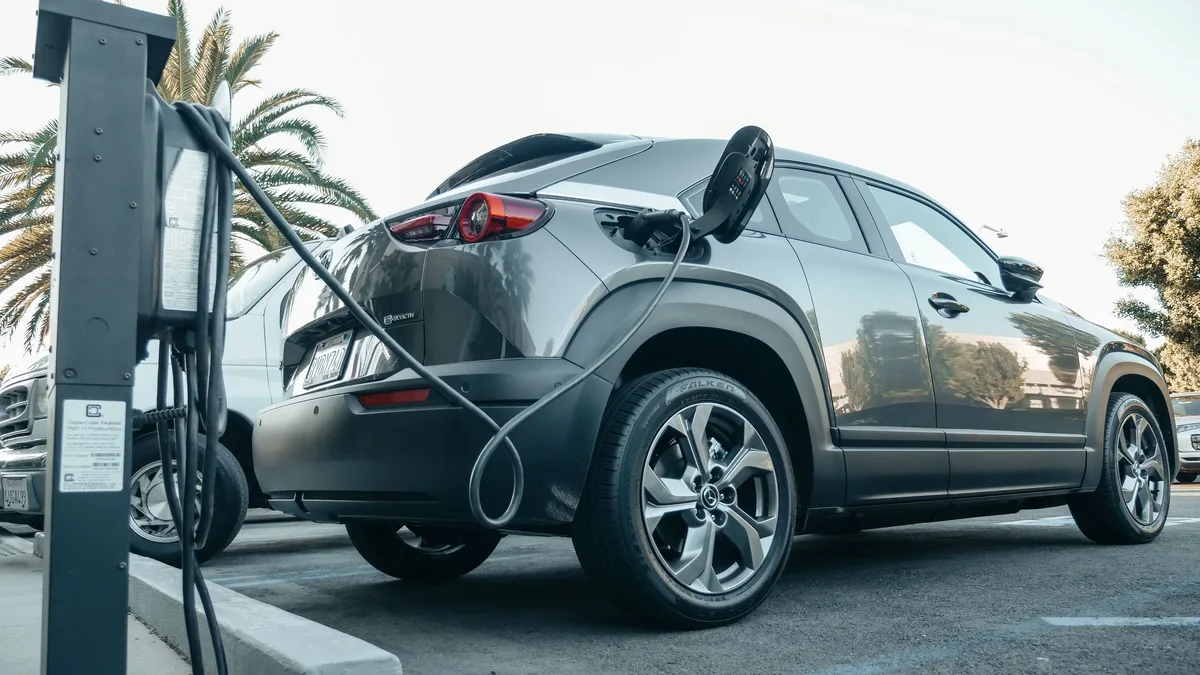
Chery iCAUR 03 electric SUV spied in India
The Chery iCAUR 03 electric SUV has been spotted in India without camouflage, potentially for launch under the JSW Motors brand.
Freelander 8 SUV Drives After Dramatic Rollover Test
The new Chery Jaguar Land Rover Freelander 8 SUV was shown surviving a severe rollover and then driving under its own power at its launch event in...
Chery Fulwin T7 EV SUV Launched in China
Chery has launched the Fulwin T7, a compact electric SUV for the Chinese market, with three variants priced from 97,900 to 118,900 yuan.

Chery Patents Exeed ET8 and Omoda O4 in India, Potential Launch Under JSW Motors
Chery Automobile has patented the Exeed ET8 and Omoda O4 in India, hinting at a potential launch under JSW Motors. The Exeed ET8 is a full-size...