Hyundai targets 5.55 million sales by 2030
Hyundai aims for 5.55 million global sales by 2030 with 100+ new models and a 6% market share, driven by electrification and expanded production in India and North America.
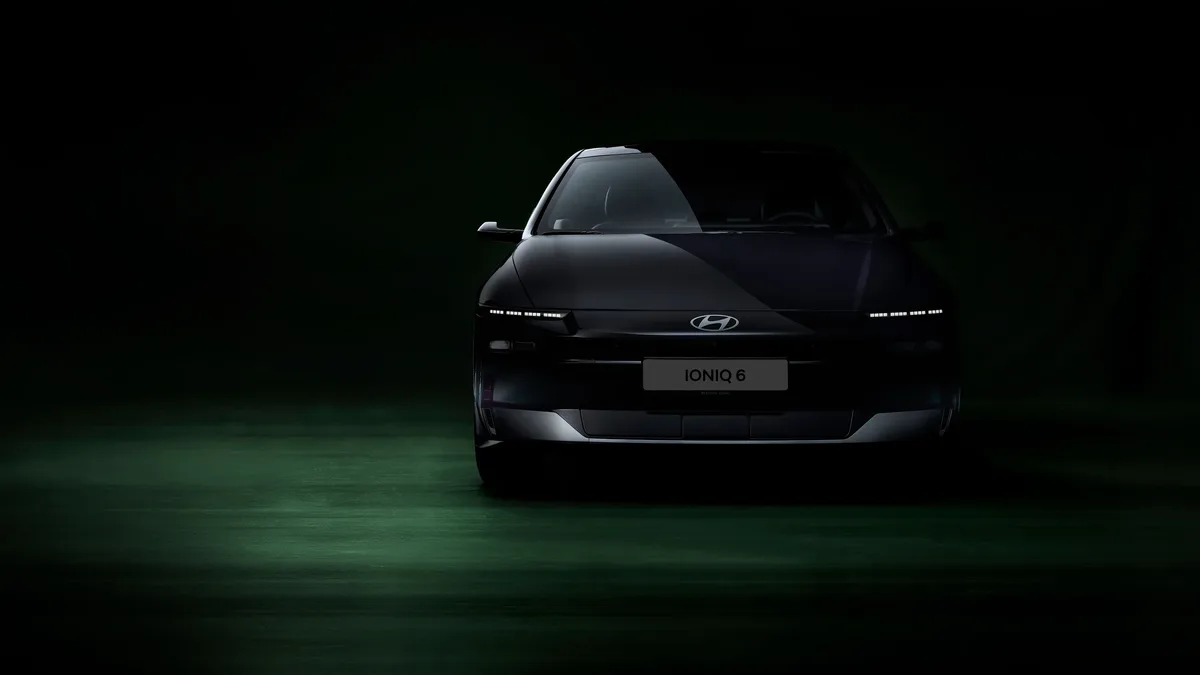
Hyundai has set a global sales target of 5.55 million vehicles by 2030, up from 4.5 million in 2025, with a 6% worldwide market share.
The company plans to launch more than 100 new models and major refreshes across its markets by the end of the decade, with electrified vehicles accounting for 60% of total sales by 2030, up from 23% in 2025.
Hyundai raised its 2030 operating profit margin target to above 9%, from a previous range of 6.3-7.3% for 2026, focusing on volume growth and profitability.
Seven new vehicles are scheduled to arrive in the next eight months, including the new generation Elantra, Ioniq 3, Tucson, Tucson Hybrid, and the first Santa Fe EREV.
The Santa Fe EREV, an extended-range electric SUV, will launch in the first half of 2027 and is expected to cover over 965 km on a full charge and tank, using electric propulsion for daily driving and an onboard engine for longer trips.
Production of the Santa Fe EREV will take place at Hyundai’s Alabama facility in the United States.
India will receive an all-new electric SUV in the fourth quarter of 2026 alongside a new internal combustion engine midsize SUV, with the electric SUV developed locally for India.
The Indian electric SUV will feature a next-gen infotainment system and Level 2 assisted driving technology, with Hyundai planning to source 90% of vehicle content locally by 2030 through over 1,400 suppliers and 900 engineers.
Hyundai’s Indian manufacturing operations currently have an annual capacity of 1.1 million vehicles, with exports expected to account for around 30% of production by 2030.
The company plans to add 320,000 units of manufacturing capacity in India as part of a global expansion to 1.27 million units, supporting its electrification strategy across hybrids, EVs, and EREVs.
Hyundai’s in-house battery cells deliver more than twice the output of previous high-nickel cells while cutting charging time by 40%, with mid-nickel NCM cells in upcoming EVs expected to reduce battery costs by around 30%.
A new cloud-based battery management system aims to extend battery life by an average of 20% by 2028, and a Thermal Runaway Protection system will debut on the Genesis GV90.
North America will receive more than 10 hybrid models by 2030, targeting 50% hybrid sales, with local parts sourcing planned to increase from 60% to over 80% and 500,000 additional production units.
North American sales reached 489,656 units in the first half of 2026, contributing to a record 595,457 unit sales in the region during that period.
Europe will have a fully electrified portfolio covering 85% of the market, with Hyundai targeting over 420,000 EV sales by 2030, up from 116,000 in 2025.
Genesis will introduce its first hybrid, the GV80 Hybrid, followed by the GV90 flagship SUV and an EREV SUV with over 1,030 km of range, aiming for 350,000 annual sales across more than 40 markets by 2030.
Hyundai N plans 100,000 annual sales, while expanding into robotaxis, robotics, and autonomous driving, including Waymo robotaxi deliveries based on the Ioniq 5 starting in Q4 2026.
Level 2+ technology is planned for Hyundai’s first mass-produced software-defined vehicle in 2028, and a 100-megawatt AI data centre capable of housing over 50,000 GPUs is planned from 2029.
Hyundai generated 95.2 trillion won in revenue in the first half of 2026, up 2.7% year-on-year, with an operating profit margin of 5.6%.
Source: GaadiWaadi