Hyundai Tucson fifth generation launches
Hyundai has unveiled the fifth-generation Tucson SUV, featuring a new design language, increased dimensions, and a range of powertrains.
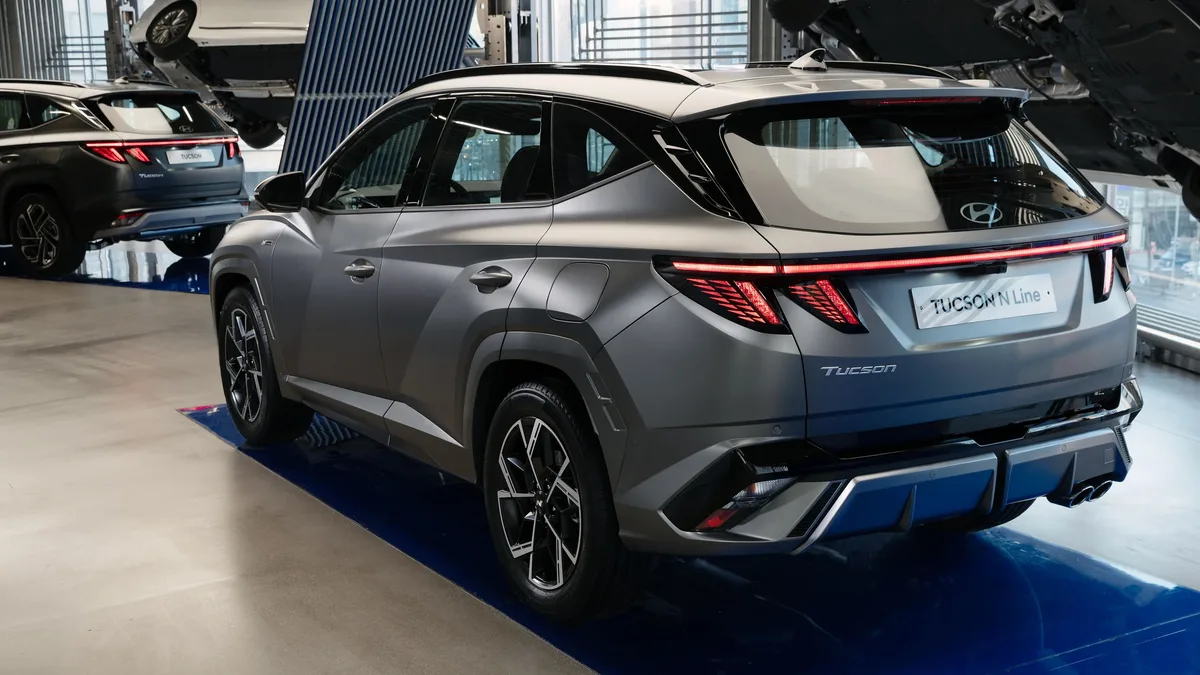
Hyundai has launched the fifth-generation Tucson, introducing the new XRT Pro off-road variant and updated powertrain options. The new model is larger and adopts the brand's latest 'Art of Steel' design philosophy.
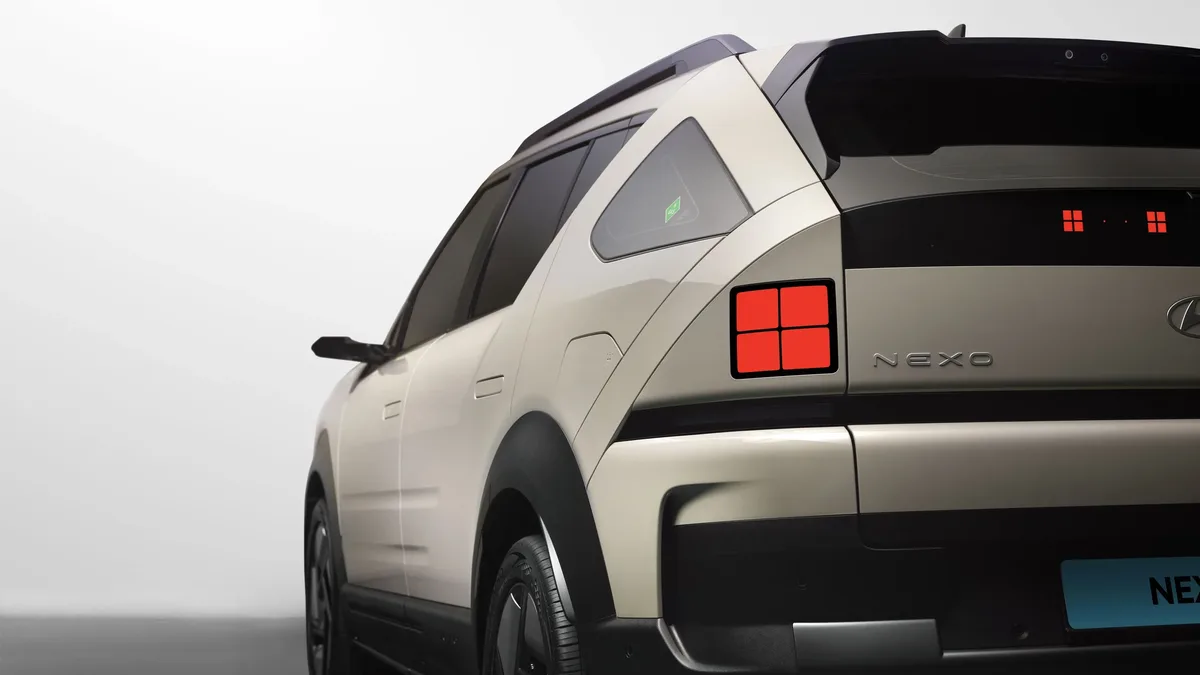
The SUV features more upright and muscular proportions with pronounced wheel arches and cleaner body surfaces. Its front incorporates the new H-Edge lighting signature, while the rear gets distinctive Prism Rear Lamps. The long-wheelbase version, which gains 60 mm in length and 40 mm in width over its predecessor, measures 4,700 mm long, 1,905 mm wide, and 1,685 mm tall. Its wheelbase stretches to 2,785 mm. Hyundai says the additional dimensions improve passenger and luggage space. Key exterior features include a rugged bumper design, sharp angular panelling, squared wheel arches, and aero-optimized sporty alloy wheels. Four new colour options are Ranger Green Pearl/Matte, Kodiak Blue Pearl, Driftwood Gray Metallic/Matte, and Red Rock Orange Pearl/Matte.
Powertrain options detailed for petrol, hybrid and PHEV variants
The new Tucson offers a wide spectrum of engines. Most accessible versions use either a 1.6-litre turbocharged or a 2.0-litre naturally aspirated four-cylinder petrol engine. Power output for petrol variants ranges from 150 to 193 PS, with torque between 191 Nm and 264 Nm. Transmission choices include 6MT, 7DCT, 8AT, and 6AT, with both 2WD and 4WD available.
The hybrid variant pairs the 1.6-litre turbo petrol engine with two electric motors (13 kW and 47.7 kW) and a 1.49 kWh battery pack. It uses a 6AT transmission, delivers a combined output of up to 245 PS and 380 Nm of torque, and accelerates from 0 to 100 km/h in 8.5 seconds. Hyundai claims fuel efficiency of up to 17.4 km/l in the Korean test cycle.
The plug-in hybrid (PHEV) model uses a more powerful electric system with a 79 kW motor and a 17.1 kWh battery. It produces 292 PS and 380 Nm, is paired with a 6AT, and is available with 4WD. It offers a pure electric range of 81 km and includes a 7.2 kW onboard charger for AC charging.
| Variant | Engine | Power (PS) | Torque (Nm) | Key Feature |
|---|---|---|---|---|
| Petrol | 1.6L Turbo / 2.0L NA | 150 - 193 | 191 - 264 | Multiple transmission & drivetrain options |
| Hybrid (HEV) | 1.6L Turbo + Electric | 236 - 245 | 380 | 1.49 kWh battery, 17.4 km/l claimed |
| Plug-in Hybrid (PHEV) | 1.6L Turbo + Electric | 292 | 380 | 17.1 kWh battery, 81 km electric range |
XRT Pro variant adds off-road capability with protection and tyres
Hyundai developed the Tucson XRT Pro with additional body protection, all-terrain tyres and 210 mm ground clearance. This gives the XRT Pro 30 mm more ground clearance than the standard SUV. The variant includes front recovery hooks, more aggressive approach and departure angles, and enhanced lower body protection with an expanded cladding package.
Performance and efficiency figures released across variants
The PHEV accelerates from 0-100 km/h in 7.9 seconds in 4WD specification, while the European 2WD version does the same sprint in 8.3 seconds. Beyond raw acceleration, the Tucson HEV features E-Traction, which uses the electric motor to manage drive torque and improve stability by reducing wheel slip during cornering. HEV Stay Mode allows climate control, audio and device charging to continue operating while the combustion engine is switched off.
One industry observer noted the significance of the hybrid option for certain markets. Auto Punditz Take said: "For India, the most interesting aspect isn't simply whether the Tucson returns-it is whether Hyundai chooses the strong-hybrid powertrain for that comeback."
The long-wheelbase version of the fifth-generation Tucson measures 4,700 mm in length, 1,905 mm in width and 1,685 mm in height with a 2,785 mm wheelbase.