Aston Martin Delays First Electric Vehicle Launch to 2033
Aston Martin has pushed back its first battery-electric car to at least 2033, with CEO Adrian Hallmark confirming a new target window of 2033 to 2035.
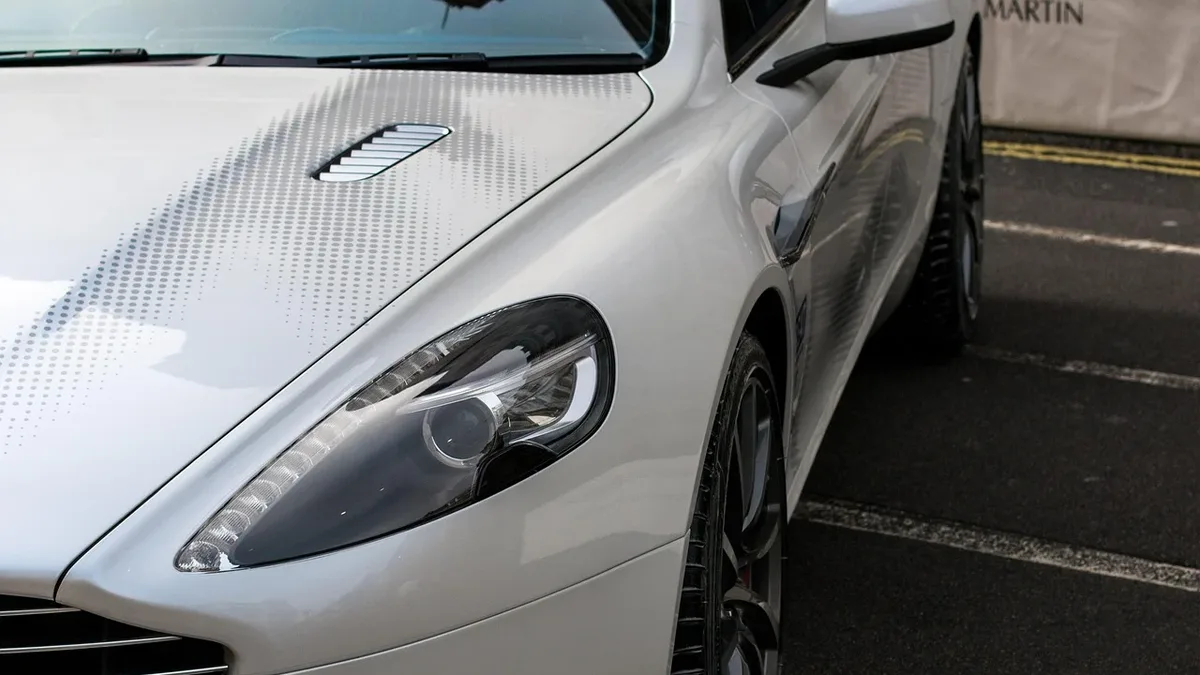
Aston Martin has delayed the launch of its first electric vehicle to 2033 or later. CEO Adrian Hallmark confirmed the timeline is now in a 2033-2035 window, with no fixed date remaining.
Hallmark stated the company will be 'predominantly ICE-based' until 2035. He described Aston Martin as not BEV deniers but BEV delayers.
Commitment to internal combustion engines through 2035
The brand plans to continue offering combustion-engined cars well into the 2030s. Hallmark said the company has a roadmap to keep both its V8 and V12 engines compliant through at least 2035.
"We have a roadmap to keep the bigger and smaller engines alive and compliant all the way through to the end of that period," Hallmark stated. This extends the approach outlined by executive chairman Lawrence Stroll in 2024, when he said Aston Martin would continue making combustion-engined cars for as long as regulations allowed.
Shifting strategy on electrification and hybrids
Aston Martin will prioritize hybridization but likely avoid plug-in systems due to weight penalties. Hallmark said the delay allows more time to assess how EV technology develops before major investments are made.
"There would be hybridisation. Probably not plug-in, because we don’t need it; we don’t need the 200kg penalties," Hallmark said. The company had previously increased its investment in plug-in hybrid technology as its EV plans were pushed back. Stroll had said Aston Martin had 'decided to invest very heavily in PHEVs' and that the technology would 'play out for a long while.'
Hallmark is open to more hybridization in the lineup but opposes plug-in hybrids. He cited evolving customer demand and legislation as key factors.
Context of past targets and partnerships
The new timeline marks a significant shift from a series of earlier, more ambitious targets. The company's first EV launch was originally scheduled for 2025.
| Previous Target Launch Year |
|---|
| 2025 |
| 2026 |
| 2027 |
| 2030 |
The delay follows a 2023 technology access deal with Lucid. Hallmark noted that by the time Aston Martin activates that deal, the available technology will be totally different from what was originally contracted. Aston Martin also has a longstanding partnership with Mercedes-Benz, its current engine supplier, to improve powertrains and electrical systems.
Executive chairman Lawrence Stroll commented in 2024 that EV demand at Aston Martin’s price point was lower than expected. Hallmark attributed the launch delays to legislation changing faster than car companies can adapt. He cited uncertain customer demand for high-end electric vehicles as a sticking point.
Between 2030 and 2035, Hallmark said everything will be replaced in Aston Martin’s product line-up. The attributes, performance and quality of the vehicles will take them up a level. The company will continue with the Valhalla hypercar and is investing in its platform for future low-volume special edition models. Hallmark hinted there might be a derivative of it that has a different roof.
This new strategy differs from plans outlined in 2024 for four EVs based on a dedicated architecture. Those planned vehicles were to span a GT, SUV, crossover, and mid-engined supercar. The company had previously revealed the Rapide E, an electric four-door, in 2019 with plans to build 155 examples.
Adrian Hallmark said: It could be 2035, it might be 2033, but it’s in that three-year-window. It’s not 2031. He added that Aston Martin only needs battery electric vehicles to be compliant for legislative reasons in certain markets just before 2035.
Today, the company maintains very low-level investment in EV research and study, not even reaching single-digit millions of pounds. Major investment will be delayed until just before 2035 when legislative compliance requires BEVs.